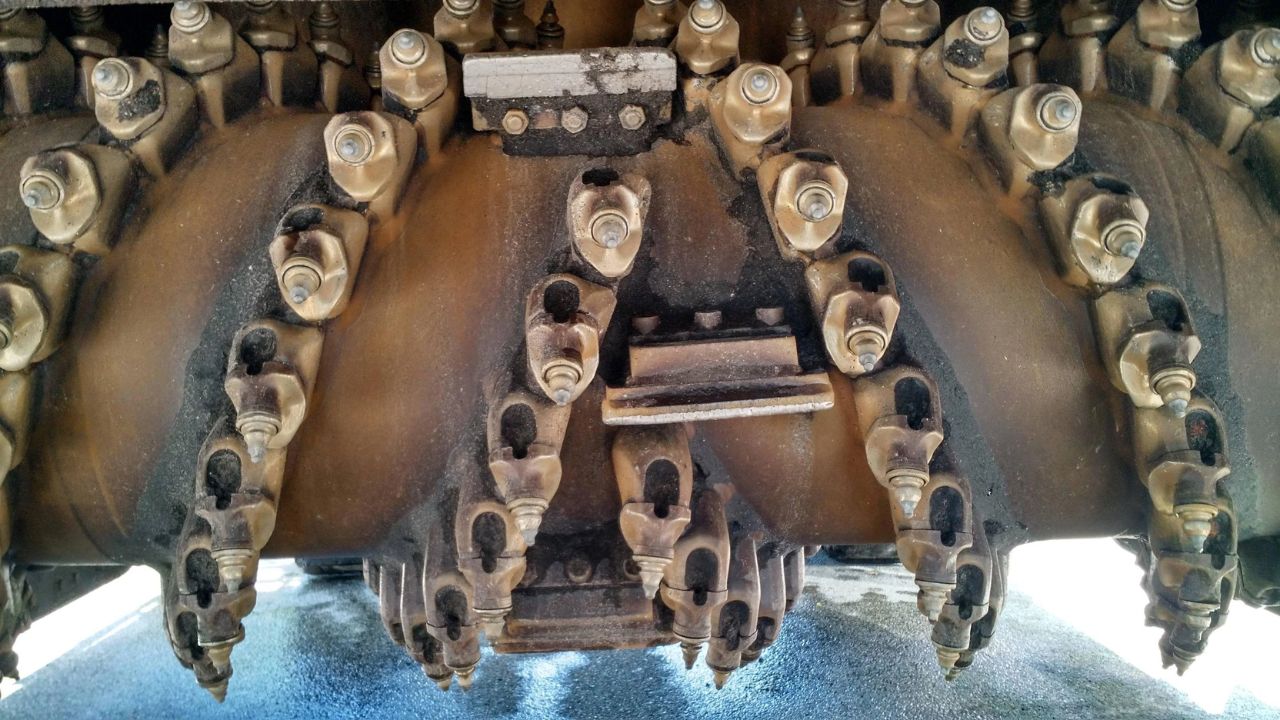
The teeth of milling machines are significant cutting tools that are essential in road construction and maintenance machines. They are also attached to milling drums and aid in the removal of old asphalt or concrete surfaces. These teeth are to work in hard conditions, such as high friction, heat, and impact. Various milling machine teeth are applied to various surfaces and project requirements. All of these types are designed and composed of special materials, which predispose them to certain tasks. Selecting the appropriate type of milling machine teeth enhances cutting efficiency, machine wear, and productivity in construction sites. Knowledge of such types assists operators and companies in being more productive.
Asphalt Milling Teeth
Asphalt milling teeth are uniquely created to remove asphalt road surfaces. They are usually employed in highway maintenance and road resurfacing works. The tungsten carbide tips on these teeth are typically sharp cutters on soft to medium-hard materials. Asphalt can be cut more easily than concrete, and, hence, these teeth are meant to operate easily and rapidly. Their form minimizes clogging and permits the flow of material throughout the milling. Asphalt milling teeth are also common in road repair work in urban areas, where old asphalt layers have to be cleared before new surfaces are laid. They assist in attaining a smooth and clean milling outcome.
Concrete Milling Teeth
Milling teeth made of concrete are used to cut on extremely hard surfaces such as cement roads, bridges, and industrial floors. Concrete is far more durable and harder than asphalt; thus, these teeth are constructed to be more durable and impact-resistant. Their carbide tips are usually harder and have reinforced steel bodies. They are designed to cut and crush hard material, not for a smooth cut. Milling teeth are made of concrete in heavy-duty construction projects, whereby old concrete structures have to be removed or repaired. They are also worn out easily as compared to asphalt teeth when applied improperly, and therefore choice is very crucial in making them last longer.
Universal Milling Teeth
Universal milling teeth are made to be used on asphalt and concrete surfaces. They can be utilized as an option, which is flexible for contractors in various kinds of road conditions. The teeth are balanced in terms of strength and wear resistance, which enables them to be used in mixed surfaces. Although they might not be as specialized as asphalt or concrete teeth, they give good performance in general applications. Universal teeth are mostly employed in projects where the type of surface varies or is not distinctly known. They assist in cutting down the frequency of change of tools, thus making road milling jobs more economical in general.
Heavy-Duty Milling Teeth
The working conditions of heavy-duty milling teeth are extremely tough. These are reinforced concrete roads, high-traffic damage roads, or mixed roads that contain stones and gravel. They are constructed using high-impact and pressure-resistant carbide tips and reinforced bodies. These teeth can resist excessive wear and heat in prolonged working hours. Mill teeth of heavy-duty are usually applied in large infrastructure developments such as highways, airports, and industrial areas. Their primary benefit is that they last longer in rough conditions, where normal teeth would be lost easily. They are beneficial in keeping productivity in challenging environments.
Fine Milling Teeth
Surface finishing and smooth road preparation are done with fine milling teeth. They are meant to eliminate thin layers of asphalt and form a smooth surface texture. These are teeth that are commonly employed in the last road preparation before applying a new asphalt layer. They have a more accurate and controlled cutting action than the normal teeth. Fine milling teeth assist in enhancing the quality of roads through a decrease in roughness and uneven surface. They are usually applied in urban roads, parking lots, and places where a smooth finish is essential. They are primarily used to provide a high-quality surface that is ready to be used with new material.
Conclusion
The teeth of the milling machines are in various forms, and each type has its own application in road construction and maintenance. Soft road surfaces are made out of asphalt, and hard and strong materials are constructed using concrete. Universal teeth are flexible to mixed conditions, and heavy-duty teeth are used to cope with extremely heavy loads. Smooth finish with the help of fine milling teeth, and reclamation with the help of reclamation teeth are used. Micro and special application teeth are used to perform specific tasks. The knowledge of these types assists companies in selecting the proper tool according to the project. This enhances efficiency, reduces costs, and improves the quality of the road in construction activity.